Accounting Standards & Financial Reporting
Understand how financial transactions are recorded, summarised and presented. Develop the skills to prepare and interpret financial statements and evaluate business performance.

Overview and Rankings
Develop the financial knowledge and analytical skills to understand business performance, evaluate investment opportunities and support financial decision-making.
The BSc Accounting and Finance programme combines accounting principles with financial theory and practical business applications. Students explore financial reporting, management accounting, corporate finance, investment analysis and the economic factors that shape financial decisions. Through practical exercises and real-world scenarios, they develop the ability to interpret financial data, evaluate business performance and assess financial risks. The programme also emphasises ethical practice, critical thinking and professional skills, preparing students to understand the financial challenges faced by organisations across different sectors.

Study Themes
Build a strong foundation in accounting, finance and financial analysis, with opportunities to explore specialist areas of the field.
The programme progresses from core accounting and finance standards to more advanced topics in financial management, reporting and investment. Students develop the numerical, analytical and digital skills needed to interpret financial information and make informed decisions. Practical learning, research and applied projects help connect academic knowledge with the challenges faced by businesses and financial professionals.










Career Paths
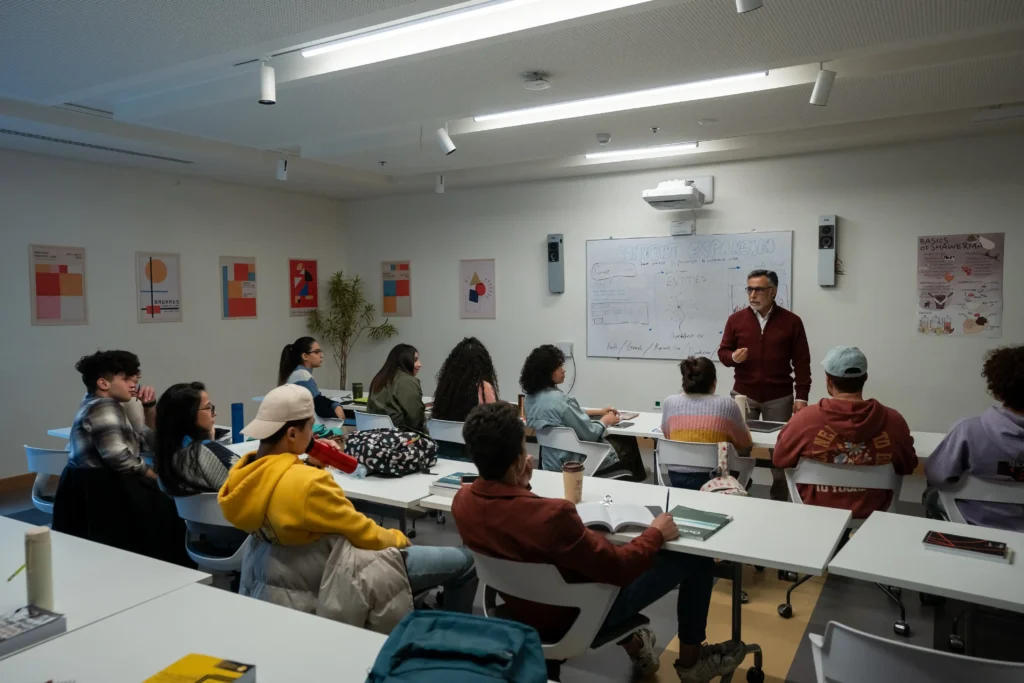
Explore career opportunities across accounting, finance, financial analysis and business management.
The programme develops a combination of technical, analytical and professional skills relevant to a range of roles in the accounting and finance sectors, as well as financial positions within businesses and public organisations. Students can explore career paths in financial reporting, management accounting, investment, financial services and auditing. The programme’s alignment with the syllabi of professional accountancy bodies also provides a foundation for those considering further professional qualifications or postgraduate study.
Journey
What do you want to learn to achieve the career paths mentioned
We regularly review our course content to make it relevant and current for the benefit of our students. For these reasons, course modules may be updated.
What is credit/national hour?
A credit/notional hour is the formal name for the estimated hours that are expected that a student would need to complete a module
How many hours is 1 credit?
1 credit is equal to 10 notional hours, so 20 credits are equal to 200 notional hours, The 200 hours includes time in lectures, tutorials, preparing for your lectures, assessments as well as your own personal revision and studying that you would do
Can study hours exceed the estimate?
In reality, you might actually go above and beyond the expected notional hours, in particular if your degree requires a lot of independent learning you would most likely exceed the predicted hours
How many credits are in a UK semester?
In the UK system each semester is 60 credits worth which is equivalent to at least 600 hours of study in one term. This is approximately equivalent to 8 hours of study a day
Academics
Head of Coventry School of Business
School of Business
MSc FinTech Course Director
School of Business
Chair of Accounting & Finance Course Director
School of Business
Foundation Course Director
School of Business
Business & Marketing Course Director
School of Business
Impact
Talent Acquisition Specialist – HR Business Partner, Talaat Moustafa Group
Coventry University gave me early exposure to real business cases, presentations, and HR work-study experience. This helped me bridge theory with practice, strengthen my communication and strategic thinking skills, and discover my passion for Talent Acquisition.
OOH Department, Froneri, Egypt
Choosing Coventry University at TKH became one of the most defining decisions in my journey. The balance between academic and extracurricular activities helped me grow beyond the classroom, develop my leadership and public speaking skills, and launch TKH Scoop. Winning 1st place in my Business Marketing graduation project was one of my proudest achievements.
Brand Manager, DAMAK, Egypt
My journey at Coventry University / TKH went beyond traditional academics, helping me develop leadership, communication, and teamwork skills. I graduated with First Class Honors, won first place at the Business Expo, and today work as a Brand Manager at DAMAK, turning ideas into tangible impact.
Stay Updated

School of Business

School of Business
School of Business