Screenwriting
Turn an idea into a short film script, from the first premise to a shooting draft.

Overview
Direct, shoot and edit your own films, and graduate with a UK degree from Coventry University, taught in Cairo.
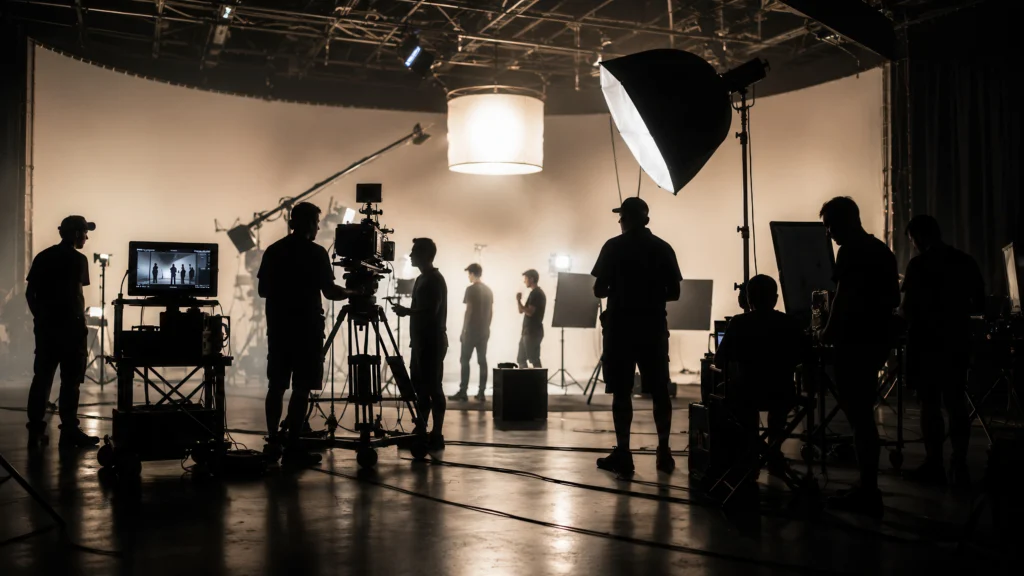
Film Production is a practice-based degree for students who want to make films and understand them. You work on productions from your first year to your last, in the roles a real film needs. The fiction short film is at the centre of the course: the form in which many filmmakers find their voice and begin their careers
Making and thinking go together here. Alongside production, you study film history, theory and the industry. The aim is a filmmaker who knows what they want to say, and why each choice serves it.
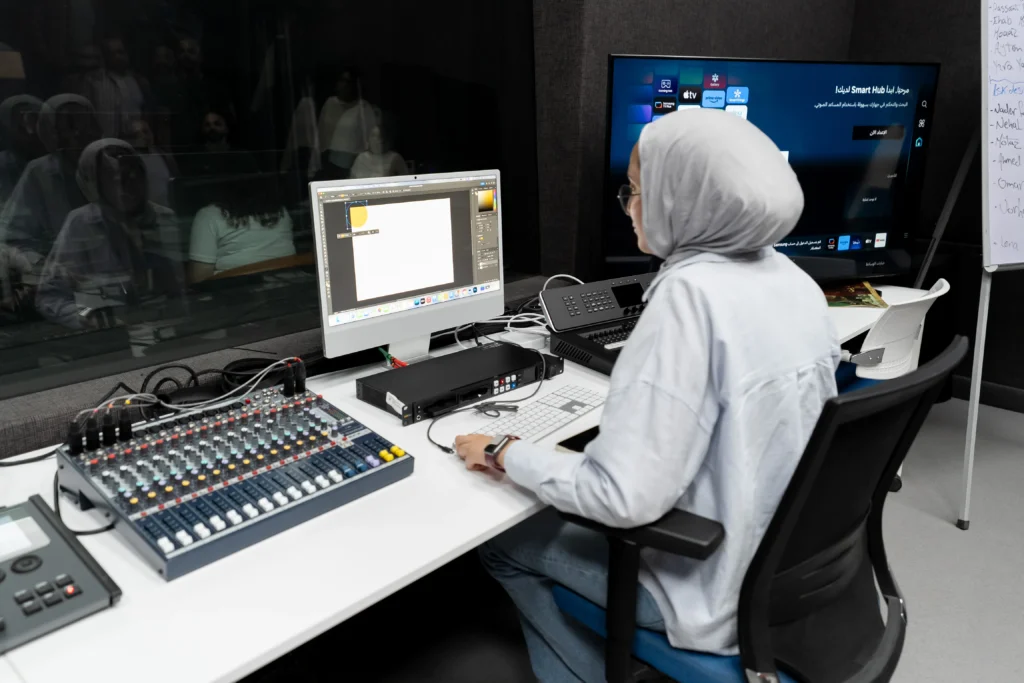
The degree is awarded by Coventry University and taught in full at the Coventry University Branch at TKH, in Egypt’s New Administrative Capital. You learn from film scholars and award-winning filmmakers, work in the Coventry Media Hub on campus, and graduate with the same Coventry University certificate as students in the UK.
Study Themes
What you will study across the degree.
suited to an evolving global film and media landscape, demonstrating a range of individual, collaborative and professional capabilities. They will develop the ability to work within standard industry workflows, communicate and collaborate effectively, critically engage with film and media, experiment with creative approaches, and use technical equipment and production techniques to develop original work. Through practical projects, research, reflection and professional development, graduates will build a strong portfolio and a professional voice suited to an evolving global film and media landscape.
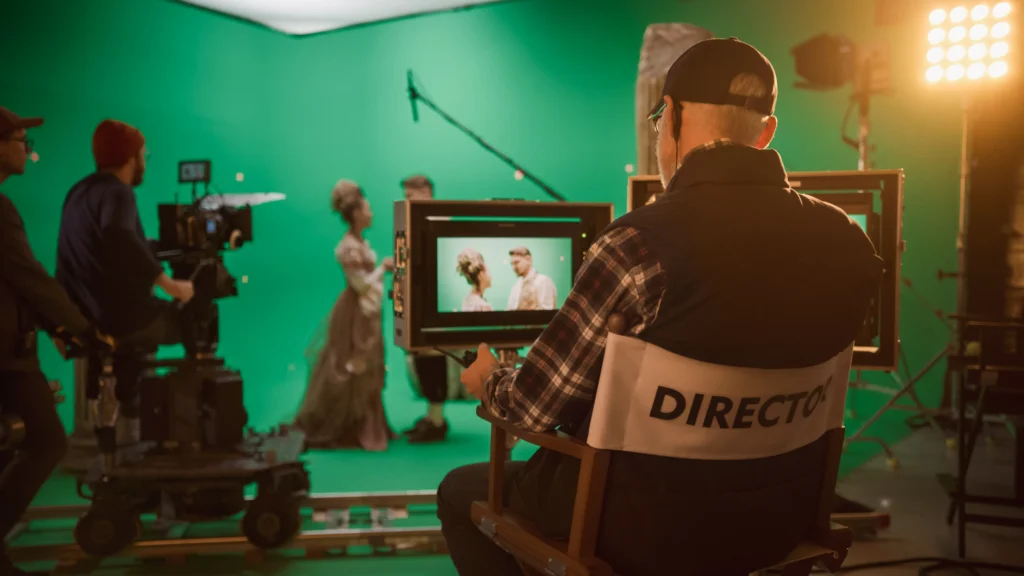
You learn filmmaking by making films. Each year you take on more responsibility, in the crew roles a real production needs: writer, director, producer, cinematographer, sound recordist and editor.
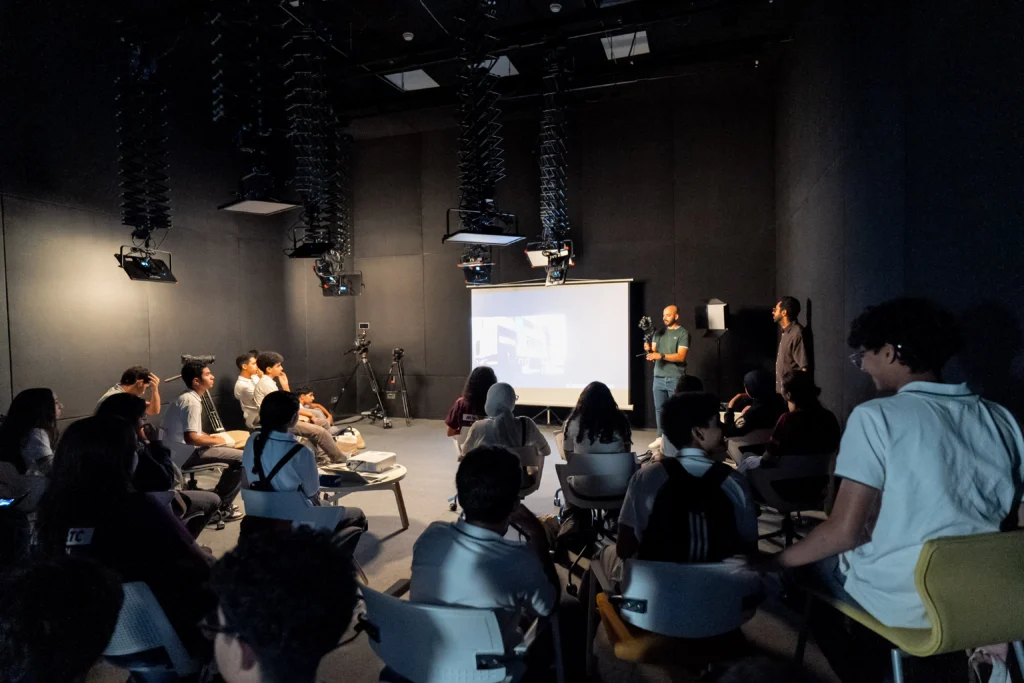
Teaching combines workshops, screenings, seminars and one-to-one tutorials. You write essays and reflections as well as films, and in your final year you support your graduation film with a written research dossier.





Career Paths
Explore the opportunities and possibilities that can follow your degree.
This course is designed to prepare graduates for professional opportunities across film and media production, with experience spanning creative, technical and production roles.
Through practical filmmaking, collaborative projects, professional development and portfolio building, graduates develop skills that can support entry-level employment across a range of production environments, including company-based, freelance and self-employed work.
Journey
What do you want to learn to achieve the career paths mentioned
Please Note: We regularly review our course content to make it relevant and current for the benefit of our students. For these reasons, course modules may be updated.
What is credit/national hour?
A credit/notional hour is the formal name for the estimated hours that are expected that a student would need to complete a module
How many hours is 1 credit?
1 credit is equal to 10 notional hours, so 20 credits are equal to 200 notional hours, The 200 hours includes time in lectures, tutorials, preparing for your lectures, assessments as well as your own personal revision and studying that you would do
Can study hours exceed the estimate?
In reality, you might actually go above and beyond the expected notional hours, in particular if your degree requires a lot of independent learning you would most likely exceed the predicted hours
How many credits are in a UK semester?
In the UK system each semester is 60 credits worth which is equivalent to at least 600 hours of study in one term. This is approximately equivalent to 8 hours of study a day
Instructors
Head of School of Design & Media
School of Design & Media
Product Design Course Director
School of Design & Media
Film Production Course Director
School of Design & Media
Digital Media Course Director
School of Design & Media
Graphic Design Course Director
School of Design & Media
Impact
Video Editor & VFX Artist, MO4 Network , Part-time Assistant Lecturer, Coventry University at The Knowledge Hub
I chose the Digital Media pathway at TKH for its unique range of curriculum, from game and web development to 3D art and media production. This diversity distinguished me in the market and helped me grow as an interdisciplinary creative. Today, I work as a Video Editor and VFX Artist at MO4 Network, working on major regional events and projects for leading brands.
Stay Updated
School of Design & Media
School of Design & Media
School of Design & Media